
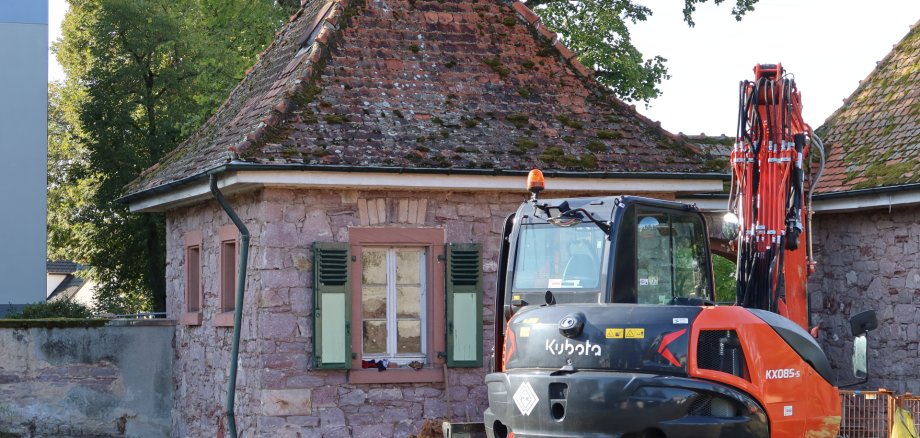
The ambitious project to transform the Old Cemetery in the Nieder-Roden district into a modern green space is taking shape. Where no burials have taken place since 1998 and the site was officially deconsecrated in 2022, a place of tranquillity and community is currently being created. The town of Rodgau is providing updates on the current progress of the works, unexpected historical discoveries and the next steps. The foundations for the current redevelopment were laid back in May 2019. As part of a charrette process, numerous interested local residents contributed their ideas and wishes on site. These valuable suggestions were incorporated directly into the design by Cologne-based landscape architect Dirk Melzer. There was also a strong demonstration of civic engagement in 2024: a petition with over 1,000 signatories succeeded in ensuring that the approximately 100-year-old lime trees on Friedensstraße would be preserved and integrated into the new park design. Since work began in July 2025, the first major phase of construction has been in full swing. The focus is currently on the restoration of the striking, listed Art Nouveau gatehouse dating from 1911, as well as the infrastructure: the utility trunk lines for sewerage, electricity and water are currently being laid. The rainwater drainage channels around the historic buildings are also currently being constructed. The floor slabs in the buildings have been poured, including lightning protection earthing and empty conduits. In addition, the new gateway opening onto Ahornweg, including the foundations, has already been constructed. The protected gravestones, together with their foundations, have been professionally excavated and are being stored safely on site for later integration into the park. Contracts are currently being awarded for the upcoming trades – ranging from restoration, carpentry and roofing work to electrical engineering. The uncovering of the old building fabric has brought exciting details to light. Once the external render had been removed, the historical assumption was confirmed: the buildings were originally designed to feature exposed masonry. In close consultation with the State Office for the Preservation of Historical Monuments (LDA) and the District Office for the Preservation of Historical Monuments, the complex will therefore be finished with exposed stonework on the exterior in future. In addition, the workers uncovered a well-preserved sandstone plinth profile of an apse-like porch, on which the cross used to be placed during funerals in days gone by. This had been buried underground since the post-war period and surprised the experts with its excellent condition. Less welcome is the surrounding root system of the former lime trees. This had severely damaged the masonry and had to be removed whilst the work area was being cleared. It also became apparent that the site had been raised twice in the past and that the height of the historic gate had been provisionally adjusted. The project demands logistical skill from the planners. The cramped access conditions and the low clearance height at the archway make it necessary to access the site from two sides – via Friedensstraße and Ahornweg. Furthermore, the weather dictates the schedule: only calcareous materials may be used on the listed buildings. The natural stone and rendering work requires a minimum continuous temperature of 5 degrees Celsius. The next steps will involve removing the historic wooden windows, the wooden gate and the iron cemetery gate, and restoring them in specialist workshops. At the same time, new components such as an aluminium and glass door system and a historically inspired trellis will be made to measure. Once the scaffolding has been erected around the complex, the roofing and plumbing work will begin. Provided the winter months pass without any major delays due to weather conditions, the structural work will have progressed sufficiently by March or April 2027 to allow the long-awaited preparatory work for the actual park and outdoor grounds to begin.